From custom to commodity: Space Is undergoing Its own industrial evolution

Not so long ago, each satellite was like a tailored piece of clothing: distinct, expensive, and designed for a single purpose. That’s no longer the case. In fact, Goldman Sachs estimates that 70,000 satellites will be launched in the next five years. So, satellites are no longer rare artefacts. They are moving toward mass production. What we are seeing at the moment is the birth of an industrial revolution – in space.
Jean-François Morizur, CEO and Founder of Cailabs, Vice President of France Deep Tech

Over the last decade, the space economy has been heading towards commoditization. That word will make some people feel uneasy: we think of commodities as bland, low-margin goods. But in truth, commoditization is the sign of a sector growing more mature. It means that the essentials – all of the things we depend on – are becoming reliable, affordable, and available at scale.
The cost of launching new assets into space has fallen steeply; satellite components are now made in runs of thousands (not tens); and ground systems once designed as one-off units are now assembled on production lines. The effect is that satellite constellations are increasingly resembling other forms of critical infrastructure.
Satellites already underpin vast swathes of our lives. There are the obvious applications, such as navigation through the Global Positioning System and in-flight connectivity. There are also the hidden but no less vital (in all senses of the word) cases – for instance, secure communications for defense. Indeed, in defense optical communications once involved solutions tailored carefully to the mission at hand. Now, they’re being adopted at scale.
The US Space Development Agency has pushed for widespread deployment and Cailabs is one of the companies building optical ground stations in volume. With the question of whether the technology works having been asked and answered some time ago, the key question now is how fast and how widely it can be rolled out. That is commoditization.
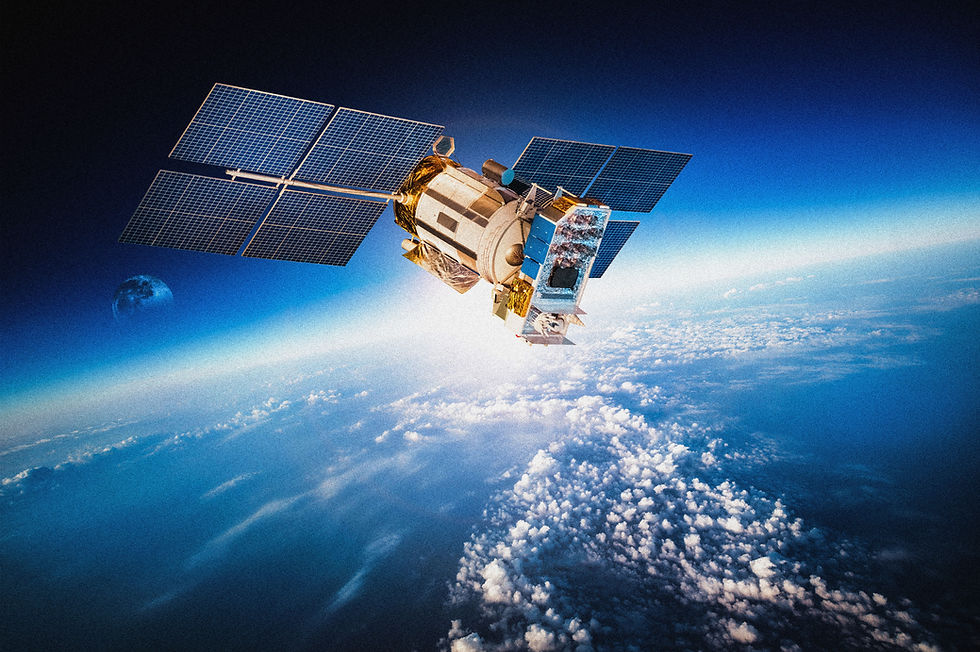
What that doesn’t mean is that innovation has stopped or even slowed down. On the contrary. R&D is still pushing the boundaries of what’s possible. Space remains a field where creativity, ambition, bold engineering, and scientific risk-taking are highly valued. But innovation today lives alongside something just as vital: the ability to deliver proven, off-the-shelf systems. In other words, there is no tension between innovation and commoditization. They’re two sides of the same coin.
Why? Because commoditization lowers barriers to entry. It means more people, companies, and governments accessing space-based goods and services. It means more predictable revenue streams, less time from concept to deployment. It means new business models. That amounts in practical terms to easier access to satellite data, more resilient comms, and richer data. Scientists who not long ago could only dream of space-based instruments may soon be able to launch them by taking advantage of the same commoditized launch and manufacturing systems that underpin commercial constellations.
Research budgets go further
The shift in science is striking. Not long ago, every mission required expensive, custom-built payloads and bespoke launch contracts. Now a research budget can go much further. Standardized platforms, shared rides to orbit, cheaper components – all of these multiply the impact of research dollars. Commoditization is turning space into a laboratory that small teams and new entrants can use.
Commoditization also reshapes how space systems and constellations are designed. As certain components and services become cheaper, more available, and more reliable, architects of new missions are drawn to them, reinforcing their dominance. Over time, a handful of high-volume options emerge as the default building blocks, just as has happened in other fast-growing industries.
Of course, the road isn’t without obstacles. With mass production comes the need for new standards, thought-through regulation, and the management of any orbital debris. With lower costs there will be more competition, and companies will need to balance rival needs: efficiency and quality, speed and safety. These are the challenges that face a maturing industry. They point to growth.
The phrase ‘industrial revolution’ is often overused but it’s a serviceable description for what is now happening. Just as steam engines turned workshops into factories, the mass production of satellites, launch, and ground systems is turning a sector of highly skilled specialists into an industry. We’re entering an age of repeatable processes, scalable supply chains, and more robust standards. That’s how a market grows from billions to trillions.
For those who care about space, this is a very exciting development. Commoditization marks not the end of a period of innovation and scientific adventure, but the start of an era in which space is a fully fledged industrial ecosystem and a permanent fixture. Once it was the sole domain of nation-states and a handful of very wealthy individuals, now it’s becoming a platform for all.
We shouldn’t fear the word ‘commodity.’ We should embrace it. It means more access, more revenue, and in the end, better outcomes for all. By any measure, that’s progress.